

Aug 11 2008

AFC at Market Days

Tag: UncategorizedAngel @ 9:16 am

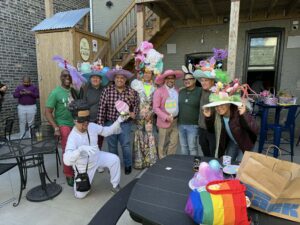
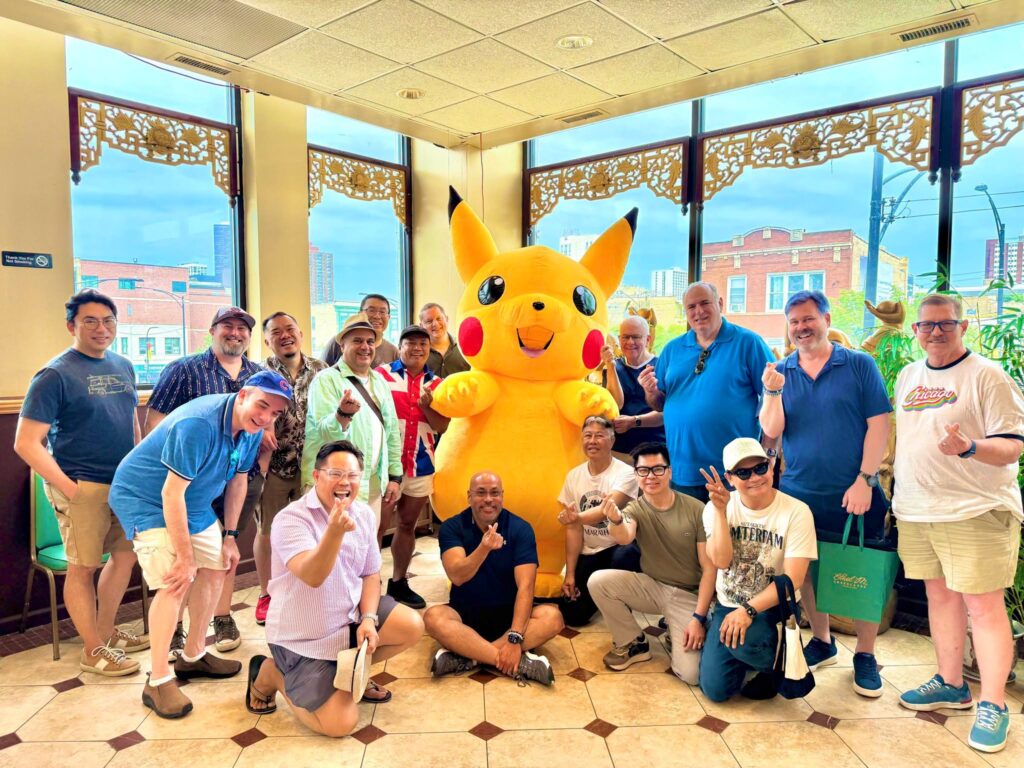
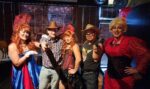
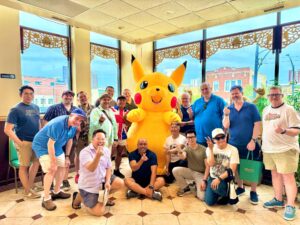
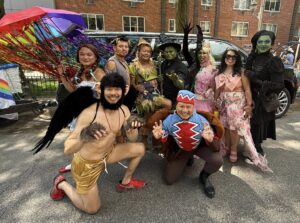
Some of the AFC members gathered for Market Days. We started up at Caribou and worked our way down through the street–finally found a $5 meal (other options started at $7-$9!) and did some dancing at the Hydrate corner. We also saw the gay cheerleaders and the ROTC troupe. A great day, fantastic weather and wonderful company. Market Days 2008!


Aug 08 2008

Asian-American Students–Model Minority?

Tag: Asian NewsAngel @ 1:48 pm
Here’s an article on a report that appeared in the New York Times last June. Enjoy!
June 10, 2008

Report Takes Aim at ‘Model Minority’ Stereotype of Asian-American Students


The image of Asian-Americans as a homogeneous group of high achievers taking over the campuses of the nation’s most selective colleges came under assault in a report issued Monday.

The report, by New York University, the College Board and a commission of mostly Asian-American educators and community leaders, largely avoids the debates over both affirmative action and the heavy representation of Asian-Americans at the most selective colleges.

But it pokes holes in stereotypes about Asian-Americans and Pacific Islanders, including the perception that they cluster in science, technology, engineering and math. And it points out that the term “Asian-American” is extraordinarily broad, embracing members of many ethnic groups.

“Certainly there’s a lot of Asians doing well, at the top of the curve, and that’s a point of pride, but there are just as many struggling at the bottom of the curve, and we wanted to draw attention to that,” said Robert T. Teranishi, the N.Y.U. education professor who wrote the report, “Facts, Not Fiction: Setting the Record Straight.”

“Our goal,” Professor Teranishi added, “is to have people understand that the population is very diverse.”

The report, based on federal education, immigration and census data, as well as statistics from the College Board, noted that the federally defined categories of Asian-American and Pacific Islander included dozens of groups, each with its own language and culture, as varied as the Hmong, Samoans, Bengalis and Sri Lankans.

Their educational backgrounds, the report said, vary widely: while most of the nation’s Hmong and Cambodian adults have never finished high school, most Pakistanis and Indians have at least a bachelor’s degree.

The SAT scores of Asian-Americans, it said, like those of other Americans, tend to correlate with the income and educational level of their parents.

“The notion of lumping all people into a single category and assuming they have no needs is wrong,” said Alma R. Clayton-Pederson, vice president of the Association of American Colleges and Universities, who was a member of the commission the College Board financed to produce the report.

“Our backgrounds are very different,” added Dr. Clayton-Pederson, who is black, “but it’s almost like the reverse of what happened to African-Americans.”

The report found that contrary to stereotype, most of the bachelor’s degrees that Asian-Americans and Pacific Islanders received in 2003 were in business, management, social sciences or humanities, not in the STEM fields: science, technology, engineering or math. And while Asians earned 32 percent of the nation’s STEM doctorates that year, within that 32 percent more than four of five degree recipients were international students from Asia, not Asian-Americans.

The report also said that more Asian-Americans and Pacific Islanders were enrolled in community colleges than in either public or private four-year colleges. But the idea that Asian-American “model minority” students are edging out all others is so ubiquitous that quips like “U.C.L.A. really stands for United Caucasians Lost Among Asians” or “M.I.T. means Made in Taiwan” have become common, the report said.

Asian-Americans make up about 5 percent of the nation’s population but 10 percent or more — considerably more in California — of the undergraduates at many of the most selective colleges, according to data reported by colleges. But the new report suggested that some such statistics combined campus populations of Asian-Americans with those of international students from Asian countries.

The report quotes the opening to W. E. B. Du Bois’s 1903 classic “The Souls of Black Folk” — “How does it feel to be a problem?” — and says that for Asian-Americans, seen as the “good minority that seeks advancement through quiet diligence in study and work and by not making waves,” the question is, “How does it feel to be a solution?”

That question, too, is problematic, the report said, because it diverts attention from systemic failings of K-to-12 schools, shifting responsibility for educational success to individual students. In addition, it said, lumping together all Asian groups masks the poverty and academic difficulties of some subgroups.

The report said the model-minority perception pitted Asian-Americans against African-Americans. With the drop in black and Latino enrollment at selective public universities that are not allowed to consider race in admissions, Asian-Americans have been turned into buffers, the report said, “middlemen in the cost-benefit analysis of wins and losses.”

Some have suggested that Asian-Americans are held to higher admissions standards at the most selective colleges. In 2006, Jian Li, the New Jersey-born son of Chinese immigrants, filed a complaint with the Office for Civil Rights at the Education Department, saying he had been rejected by Princeton because he is Asian. Princeton’s admission policies are under review, the department says.

The report also notes the underrepresentation of Asian-Americans in administrative jobs at colleges. Only 33 of the nation’s college presidents, fewer than 1 percent, are Asian-Americans or Pacific Islanders.


Aug 06 2008

Halsted Street Market Days!

Tag: UncategorizedAngel @ 1:28 pm

This weekend is Halsted Street Market Days and AFC is gathering at Caribou Coffee, 3500 N. Halsted at 1 p.m. this Sunday (8/10/08). We’ll hang there until about 1:30 and then walk up and down the fair, mingle and enjoy the day. See you there!


Jul 29 2008

First-person Narrative from China

Tag: Asian News, Gay NewsAngel @ 2:45 pm

AFC Members:
This arrived from a Chicagoan visiting China. We received it from Earl, someone known to our Board. Enjoy!
 

Greetings from Emei Mountain, China,

     Southwestern University has concluded its spring semester, delayed and rescheduled because of the tragic Sichuan earthquake.  As the term came to an end, we all, staff and students alike, were tired and distressed.  We unwound with banquets and parties, acknowledging a job well done under difficult circumstances, and anticipating higher achievements in the new school year 2008-2009 that begins in September.
     In the first photo attached, you see a celebration with friends and fellow teachers at a fine Chinese restaurant on the Fourth of July, the United States of America’s National Day.  We ate Chinese delicacies including duck’s tongue, goose tongue, and eel, and toasted with Chinese spirits and beer.  The restaurant owner and servers came over to toast us, as did guests at other tables.  Here you see me sharing a ‘bottom’s up’ with a guest from another dining party.  The man in the black shirt, standing, is Nick, another English teacher and my good friend who arranged the venue and suggested the dishes.  His father-in-law is seated to Nick’s left.  At the left of the picture is Sunee, a great-hearted Chinese lady from Thailand whose American husband, Cecil, also teaches in my department.  In the second picture, you see the stacks of beer bottles at a recycling station a short walk from the campus.  We at the university generate our share of the empties.  Thanks to Cecil for these pics.
     So let’s talk about food and drink in China.
     There are three pillars of Chinese hospitality, especially where men are present: tobacco, alcohol, and food.  Next time I will talk about Chinese cuisines.  But first, the accompaniments, which, in many situations particularly among males, eclipse the food for their social significance: tobacco and alcohol.
     During meals, celebrations, and sometimes even office meetings, alcohol and cigarettes are important parts of the proceedings.
     Back in the States, I have occasionally appreciated a cigar: HavATampa, or, when I studied and taught at the University of Cincinnati, Cincinnati’s own brand, Ibold, not connoisseur quality but a bit of the local color.  When we were kids in college, classmates and I smoked cherry-flavored Swisher Sweets cigarillos, our misguided way of feeling sophisticated.  We also drank Boone’s Farm and Annie Green Springs rot-gut pop wines.  Folks my age will remember those fads, and shudder: we were young and didn’t know any better.  Ah, innocence!  I and friends in Chicago more recently would enjoy a glass of wine and gourmet cheeses as a weekend diversion, or attend a wine or cigar tasting.  In China, tobacco and alcohol are staples of social life.  Gradually assimilating to the Chinese customs, which I at first declined, for example, I now accept when a cigarette is offered, and carry them myself to share with others.
     As a Buddhist I accept the Five Precepts: respect life, property, sexuality, truthfulness, and sobriety.  Don’t these vows preclude smoking tobacco and drinking alcohol?  Some think so.  More properly, the Precepts are guidelines rather than prohibitions, intended to make us mindful of our behavior and its consequences for oneself and others.  Also instructive is the figure of Mi Lo Pu Sa, the Chinese rendition of the Buddha Maitreya: the rotund, jolly figure gracing the entrance halls of Chinese Buddhist temples.  Westerners know him as the ‘Laughing Buddha’ from kitsch gift shops: rub his belly for good luck!  (A thing Asians never do.)  Mi Lo is free to partake of the world’s pleasures (hence his well-fed appearance) because he is not controlled by them.  This is wisdom indeed.
     China is the world’s largest producer and consumer of tobacco.  About 60 percent of Chinese men over age 15 smoke, and younger boys are sometimes seen smoking.  A far smaller proportion of the women, probably about 4 percent, smoke.  When they do, it is almost always in private or among themselves, and not around the men.  The 350 million Chinese smokers are almost a third of the world’s total.
     There are some quality Chinese cigars, but the ’Great Wall’ cigars that come five to a pack for a three yuan (about 40 cents US) are poorly manufactured, unravel easily, have a harsh taste, and the smoke does not provide a pleasing aroma.  You get what you pay for.
     China’s output of 2 trillion cigarettes a year is about 40 percent of world production.  There are dozens of brands and variations within brands, with many major cities having their own local factories and labels.  Some are cheap: a pack of Tianxiaxiu, made here in Sichuan Province and smoked by laborers, goes for two yuan.  Exclusive brands favored by the well-heeled and the Communist Party elite (= often the same thing) can run 80 yuan a pack.  It is no cheaper to buy by the carton of ten than the individual pack; a carton is just the price of a pack multiplied by the number of packs
     In China’s hierarchical society, there is an association of rank with the brand of cigarettes one displays.  Out of curiosity I have tried numerous brands.  If I happen to display a cheap brand, common workers such as bus drivers, or students, are satisfied, but university staff and restauranteurs around the university tell me that, as a professor, a person of some social standing, I should be smoking more upmarket kinds.  I now stock both tiers of brands, to bring forth according to the social setting I am in.
     When offering a cigarette to someone, pull two cigarettes from the pack and hold out both to one’s associate.  He takes one, and you take the other.  If you are offering to several people around a dining table or meeting table, offer successively two at a time, beginning with the highest status person present (a workplace boss, or the father of the family), or else hold out the pack itself so that the men may take directly from it.  Then take turns with the matches or butane lighter, to light up one anothers’ smokes.  If you are the one distributing the cigarettes, you can offer to light the highest-ranking person’s cigarette, although a lower-status man who hopes to score points with the bigwigs is likely to knock your hand away so that he can grovelingly do that himself.
     There is an increasing number of articles in the bigger Chinese newspapers about the health hazards of smoking, signaling a rising but still low-key official campaign against smoking.  An example is an article in the Beijing-based English-language newspaper China Daily, which laments that the main characters in a popular TV show, The Bund, portraying Mafia life in 1930s Shanghai, smoke, and that viewers are imitating the hero’s ‘cool’ style of holding a cigarette with three fingers. [1]  Cities increasingly prohibit smoking in public places.  For a time the building of new cigarette factories, including joint ventures with overseas concerns (reviled in the media as evil exploiters of the babes-in-the-woods Chinese, though their relocation of jobs from the US to China is welcomed), was halted.  But it does not seem the social smoking will diminish any time soon, especially in the countryside.
     Now to the second mainstay of Chinese hospitality, alcohol.
     My Aussie colleague Trevor from my days at Hubei University in Wuhan referred to the key Chinese alcohols as ‘the three joes’: bai jiu, white wine, hong jiu, red (or brown, which is the same thing in Chinese perception) wine, and pi jiu, beer.  Besides the play on the pronunciation of jiu, much like ’joe,’ is the Australian slang expression ‘Joe Blake,’ meaning a snake.  Some kinds of Chinese wine, notably bai jiu, are infused with herbs such as ginseng, or insects, scorpions, and snakes, which are believed to impart medicinal value to the drafts.  At Trevor and his wife Isla’s apartment at Hubei University, I sampled the snake wine they had purchased on their own trip to Emei Mountain.  Americans have the expression ’snake oil,’ meaning a dubious panacea, based on the bogus medical cures legendarily sold by traveling merchants and showmen in Wild West days.  In China, a literal kind of snake oil persists as a folk remedy.
     What is popularly translated by the word ‘wine,’ jiu, is really hard liquor.  The Chinese have been making such drinks for thousands of years, and are quite skilled at it.  While the Mesopotamians brewed beer 4000 years ago, the Chinese seem to have the lengthiest history of high-grade alcohol.  Arabian merchants introduced grapes and drinks made from them to China in the second century BCE, but those wines did not catch on.  The Chinese turned grapes into brandy, a drink which seems to have originated here, and continue to produce wonderful fruit brandies.  In collaboration with French concerns, the Chinese are beginning to produce red wines on the European pattern.  Many of these are overly sweet, or so dry one’s face puckers.  Some ’Great Wall’ wine (remember ‘Great Wall’ cigars? - the Great Wall icon is a widely used marketing icon in China) are a palatable balance of the two poles.
     The most common alcoholic drink of specifically Chinese derivation is bai jiu, ‘white liquor,’ a sweet-tasting, colorless spirit that comes in proofs of 30 to 65.  It is sold everywhere in grocery stores, snack stands, and in restaurants.  It is made from cereals, rice, sorghum, and wheat, and fermented with yeast and sugar.  When filtered and bottled, it is called cui jiu.  If distilled after fermentation, it is known as shao jiu, a stronger drink more common in the north of the country.  Wu liang ye is a related ‘five-grain spirit’ made from wheat, rice, barley, sorghum, and maize.  Chinese like to put things into lists.  The ‘five grains’ are usually catalogued as rice, millet, barley, wheat, and sorghum, although in some old lists oats, maize, or soybeans substitute as the fifth element.  The five-grain liquor is quite good, and the price is almost as high as that of the premier Chinese vodka, mou tai.
     When first getting a whiff of bai jiu, one recognizes how powerful it is.  On first taste, one feels the firewater in one’s sinuses, the perfect illustration of why taking a drink of strong alcohol is called, in American slang, ’a snort.’
     Many Chinese liquors are seen as aphrodisiacs.  There is a kind of brown wine, hong jiu, that goes under the brand name, ‘Strong husband’: not strong in the manner of a sturdy and steady provider and protector for his family, but strong in the sense of potent in bed!  Remember, Jim from the US, when you and I were walking around Emei’s ‘Snack Street’ two summers ago, a young Chinese man talked with us for a bit.  When I pointed out bai jiu to you, he remarked, ‘It makes you strong - strong for sex!’  In actuality, it increases the desire but diminishes the performance.
     While women seldom drink in public, among the men, a meal usually begins with a glass of bai jiu from a large jug on the restaurant register counter, or else from a bottle purchased on the spot or even brought with us.  In China, unlike in the United States, it is OK to carry outside food and drinks into a restaurant.  When that round of stronger liquor is finished, the men proceed to drinking beer.
     My Aussie colleague Karen, from Wuhan’s Hubei University, dubs bai jiu ’rocket fuel.’  By contrast, Chinese beer has lower alcohol content than European or American beers.  But it comes in bigger bottles.
     Tsingtao, China’s most famous brand of beer, exported worldwide, is named for the city that was once a German colony.  (The city’s name is spelled ‘Qingdao’ by the Pinyin system of turning Chinese sounds into the Latin alphabet.  The beer name retains the older Wade-Giles romanization.)  Being good Germans, the settlers, in 1903, established a brewery which continues today.  There are presently three Tsingtao factories.  One turns out the top-flight product for export.  The output for the domestic market is considered premium, too, both for quality and by a correspondingly higher price than other brands.
     Despite the renown of Tsingtao, Harbin Beer began brewing even earlier, in 1900, by the Russian colonizers in the northeastern Chinese city of that name.  It is almost as good as Tsingtao.  The Harbin Brewery was acquired by Anheuser-Busch, which exports the beer to America and Europe, though its international market share is much below that of well-advertized Tsingtao.
     The beer called Snow (a six-pointed white snowflake in an orange circle on a green background is its logo) is made here in Emei.
     The draft beers one encounters are often watery.  One learns which sidewalk barbecues and cafes serve good draft or water the stuff down.
     Many folk here in Emei prepare their own homemade wine.  It has a hazel color, thick liqueur-like consistency, and sweet, mild, brandy-like taste.
     Then there is mou tai (also spelled mao tai), China’s most famous alcoholic beverage.  This smooth, clear sorghum spirit is distilled exclusively in Guizhou Province.  It is named after a town there, where a certain combination of water percolating through rock and a climate nurturing benign airborne microbes is said to provide the right conditions for its creation.  It is produced in versions ranging in alcohol content from 35 to 53 percent.  It has a brewing history dating back to the Han Dynasty in 135 BCE, and won a gold medal at the 1915 Panama-Pacific Exposition in San Francisco (that year’s world’s fair, named for the opening of the Panama Canal).  Mou tai became popular nationally and internationally when Chairman Mao, who did not care for bai jiu, was served it instead, and used it to entertain Richard Nixon at a state banquet during that American President’s historic visit to China in 1972.  The taste merits its acclaim.  But it is pricey: a quantity about that of a quart costs 450 yuan, about US $55.
     During meals, the host will propose an initial toast for everyone, and then anyone present may toast another or the entire group.  Some men tap their glass on the table to alert the diners that a toast is about to be made.  The toast usually takes the form of gan bei, ‘dry the glass’: drink it all down.  (Even when drinking brandies or grape wines, the Chinese drain the glass, rather than sip for the taste.)  The host or the person proposing the toast is pleased if you drain the glass with enthusiasm and flourish.  If you are concerned that you are being pressed to drink too much or too fast, you can invoke gao xin mai mai lai, ‘happily, happily, slowly, slowly.’  Or say sui bian, ‘as one pleases,’ meaning drink as much or as little as you wish.  Premier Zhou Enlai (1898-1976) only touched his glass to his lips when toasting.  If you say, ‘I will drink like Zhou Enlai,’ it will be accepted.  Now, people acknowledge the potency of bai jiu, and do not typically expect one to go completely gan bei with a glass of that product; gan bei usually involves beer.  Everywhere in China, it is acceptable for someone who does not care to partake of the beer or spirits to refrain from doing so (although one’s manliness is gauged by one’s ability to hold his liquor).  One can respond to a toast with tea, or soy milk, or even a bowl of soup or rice porridge.  Be warned that at some banquets and at weddings the host will have water in his bottle or glass instead of bai jiu, and only appear to be drinking.
     Beware of contradictions in the drinking ritual.  Once I was generously, so I thought, filling a friend’s glass with beer after he had emptied it.  He scolded me for trying to get him drunk.  Each person, he said, is allocated a separate bottle of beer, and drinks it himself.  Yet often I see people, especially the hosts at dinner gatherings, filling others’ glasses.  The same person who chided me for filling his glass from ‘my’ bottle I noticed on another occasion pouring beer into other people’s glasses from ‘his’ bottle.  When I pointed out this discrepancy, he could provide no explanation.  I infer the real rule is: be considerate, but have a good time.
     I have been, on the one hand, advised to participate in the drinking rituals with leaders during formal banquets.  This, I am told, shows I am adapted to Chinese culture.  On the other hand, I have also been told that I should sit there looking befuddled and unable to drink, that I am expected to fit the stereotype of a ‘foreigner’ who does not know the customs; if I act like a Chinese, leaders will think me too forward.  The latter is more likely to happen in outlying areas like Emei, while in the larger, more cosmopolitan cities, ’foreigners’ are more easily accepted.
     In most places in China, when toasting, one downs the whole glass of beer, then shows the glass to the fellow toaster(s) to confirm that it has been gallantly emptied.  Note that in China, beer is served in glasses about twice the size of a Western shot glass but less than half the size of a water glass, so the quantity of beer imbibed at one gulp is not excessive.  In Beijing, one leaves a little left in the glass.  By not taking all the golden liquid, one shows an abundance, i.e., the ‘gold,’ which, by sympathetic magic, indicates prosperity will come.  Few Chinese drink red grape wines, but I have learned that when one does so, a little of that kind of wine should be left in the glass as a talisman and harbinger of prosperity to come.
     As for soft drinks:  Tang, in various fruit flavors, not just the powdered orange drink I grew up with and which in the 1960s was touted as used ‘by the astronauts,’ is available both as mixes, and already made up in individual or two liter size plastic bottles.  There is a coffee-cola that is…well, funky.  It tastes like cola that someone dumped coffee grounds into.  I tried it out of curiosity, even though this combination of ingredients sounds strange to an American.  There are tasty grape and peach sodas.  I have never seen diet sodas in China.  I don’t drink diet sodas, so that’s no hardship.  Diet sodas taste like chemicals to me.  ‘Just for the taste of it, Diet Coke,’ mewed the advertising.  Who are they kidding?
     Tea, an Indian discovery, is China’s pervasive drink.  Even in the summer, people drink hot tea.  Teahouses are everywhere.  Bars or pubs on the European and American pattern, though, are rare.  The drinking of alcohol is done in restaurants and karaoke houses.  Sadly, the pub operated by my friend Ryan has closed down, for Ryan’s department, tourism, is being consolidated from Emei to the university’s Chengdu campus.  Then it will be phased out when the students currently enrolled in the program process through to graduation.  The administration has decided this vocational major does not jive with the university’s engineering and academic emphasis.  Too bad, because ours was one of the best-rated tourism programs in China.
     Though we have the saying ‘All the tea in China,’ China has as interesting a culture of alcohol as of tea.  Ancient Chinese shamans used alcohol and whirling dances to get into altered states of consciousness in order to contact the supernatural realm.  The 14th-century historical novel The Romance of the Three Kingdoms speaks of Chinese generals of the second century CE drinking heavily, but then rousing instantly to perform feats of derring-do when enemies attacked.
     In the novel A Dream of Red Mansions, written in 1750, both men and women of the upper class drink heavily.  Today most Chinese women do not drink or smoke so much in public, although I have seen some do it, and even out-match the men in ’bottom’s up’ challenges.  Two of the aunts in a family I know can outdrink the men, much like the character Marion Ravenwood (played by actress Karen Allen) in the 1981 movie Raiders of the Lost Ark, who drank the Nepalese yak herders under the table.  Once during a birthday party when the bai jiu and beer flowed freely, I wanted to complement the aunts on this, but did not know how to say it in Chinese.  The male friend who had invited me and who was helping translate things I could not express myself replied, ‘I will not say that.  It is insulting to the men.’
     Chinese poets of yore used liquor to fire their imaginations.  Drinking games required participants to recall and recite poems, or compose poems, or complete one anothers’ lines in an emerging group poem.
     Take Cao Cao (155-220 CE; his name is pronounced ‘Tsao Tsao’), a general, politician, and poet.  On the completion of a certain pavilion he commissioned, Cao Cao rejoiced with wine.  ‘The wine had inspired Cao Cao.  He called for writing brush and ink stone, intending to celebrate the Bronze Bird Tower in verse’ [2].  There is an association in Asia between the fine arts and the martial arts.  The samurai of Japan studied tea ceremony, meditation, and calligraphy.  Vietnam’s Ho Chi Minh was a poet, and Mao Zedong was a poet with a fine calligraphic hand.
     At a party at Hubei University, after sharing a gan bei with bai jiu, a woman present said that, in keeping with longtime Chinese custom, it would be proper for me to compose a poem.  I essayed a bit of doggerel:

          Sage poets of old
          Did ‘drain the glass’;
          May I be so bold
          As to match their ‘class.’
 
By that last word, I meant ‘classiness.’  It was the best scan I could manage on the spur of the moment.
     Alcohol, one of humankind’s universals, transcends time and place.  Consider one of the scenes in ‘Rick’s Cafe Amercain’ in the classic World War II-era movie, Casablanca (1942).  The German envoy Major Heinrich Strasser (played by Conrad Veidt) is quizzing the American expatriate Rick Blaine (Humphrey Bogart), with the corrupt but sentimental French police prefect, Captain Louis Renault (Claude Rains), observing:

          Strasser:  ‘What is your nationality?’
          Rick:  ‘I’m a drunkard.’
          Renault:  ‘And that makes Rick a citizen of the world.’ [3]

     Are we not all citizens of the world?  To my friends across the miles and around the globe, I raise a glass in joyous salute.

     Sent while tossing back some bai jiu,
          no kidding, it seemed appropo;
               no snake in the bottle this time, though.

Tom Emei Yinshi - the Hermit of Emei Mountain
__________
     [1]  Zhang Kun, ‘Smoking in ‘The Bund’ sparks fire among viewers,’ China Daily, 27 (18 July 2007): 1.
     [2]  Luo Guanzhong, Romance of the Three Kingdoms, Moss Roberts, trans. (Beijing: Foreign Languages Press, 2003), Vol. III, pp. 1349, 1351.
     [3]  It is hard to know who to credit for this dialogue.  The screenplay for Casablanca was based on an unproduced play by Murray Bennett and Joan Alison, rewritten by Julius J. Epstein, Philip G. Epstein, and Howard Koch.  Though crafted by committee, the seamless script was voted the best screenplay of all time by the Writer’s Guild of America in 2006.


Keep your kids safer online with Windows Live Family Safety. Help protect your kids. =


Get fantasy football with free live scoring. Sign up for FanHouse Fantasy Football today.


  2 Attached Images


4thJuly.jpg
View full size  |  Save to my AOL Pictures Saving images to my AOL Pictures…  |  Download
Bottles.jpg
View full size  |  Save to my AOL Pictures Saving images to my AOL Pictures…  |  Download

Jul 21 2008

Nunsense at Campit Aug. 2!

Tag: Asian News, EntertainmentAngel @ 3:11 pm

For those of you who are regular Saugatuck, Mich., bunnies, me (Angel Abcede) and Mikey Apuada are taking our show Nunsense, A-men! to Campit. We’re performing two shows (3 p.m. and 8:30 p.m.) on Saturday, August 2. Go to www.campitresort.com or www.myspace.com/nunsense_amen_chicago for more info!


Jun 30 2008

Chicago Pride 2008

Tag: AFC, Chicago, EventsAngel @ 1:00 pm

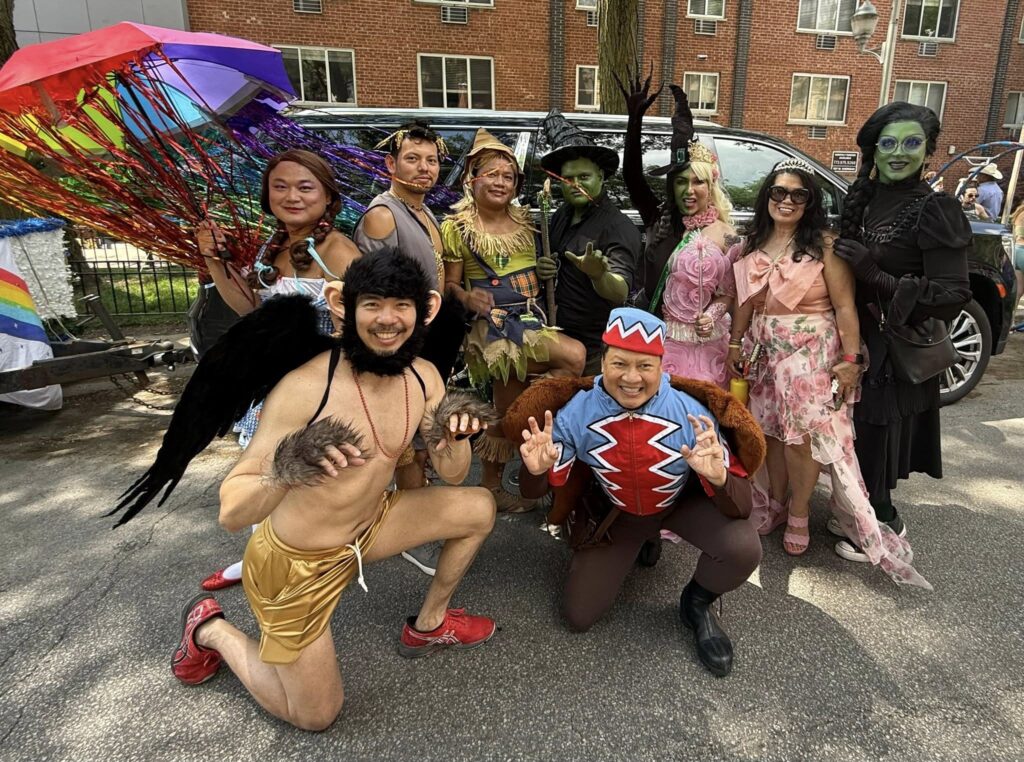
There were a couple of downpours, but that didn’t dampen our spirits. The Asians and Friends float for the 2008 Chicago Pride Parade was a great success. Kevin looked stunning as a walking Pride flag and Dat was our own Vietnamese go-go boy. We won’t say what Will from Asian Human Services did in the truck, but suffice to say, he was relieved upon doing so.

It was also fun how about 20 young folks jumped on our little float during the time the parade was held up and they stayed almost through the whole thing!

Then of course, the food at Thai Classic was wonderful.

Good times were had by all.


Jun 12 2008

Happy Loving Day!

Tag: MiscellaneousBrad @ 5:18 pm

Cross posted from Daily Kos:

Today is Loving Day, the anniversary of the day in 1967 when interracial marriage became legal across the United States.

The seemingly appropriate name actually comes from a court case, one started by Mildred and Richard Loving, who were forbidden from marrying in their home state of Virginia.  At the time, Virginia was one of sixteen states that had laws making it illegal for couples to marry across racial lines.  The Lovings were married in Washington in 1958, but as soon as they returned to Virginia, the couple was arrested. The Lovings spent time in jail for violating Virginia’s state law against people of different races “cohabitating as a man and wife.”

It wasn’t until nine years later that the Supreme Court set aside their conviction and ruled that the Virginia anti-miscegenation laws, and all other such state laws, were unconstitutional.  Loving Day is not remembered as a victory for Civil Rights, and there are commemorations of the day in several states.

Whether or not you’re celebrating Loving Day, it’s a good day to remember that this kind of discrimination is not the distant past. Barack Obama’s parents would have been criminals in sixteen states when he was born, for the simple act of being married.

It’s also a good day to remember that this kind of legislation, including  the “Defense of Marriage Acts” now in effect in more than half the states, will one day be looked on with the same distaste as the law that put the Lovings in jail.


Jun 09 2008

Call for Queer Artists

Tag: Chicago, EventsAngel @ 9:15 am

Hello Friends,
We’re looking for poets, writers, musicians, rabblerousers interested to read/perform on JULY 18 at Insight Arts, “Queering the Night”. This may be a bi-monthly event that will happen at IA’s new space called Center for New Possibilities, 1505 West Morse.

We’re especially looking for artists who address issues of homophobia, war, racism, sexism, work, and other social justice issues in their work.
If you or someone you know may be interested, please do drop me a line at lani@insightartsliberation.org or simply respond to this email.


Thank you!!!!!!

In struggle,
Lani T. Montreal


Jun 06 2008

6/6 - Obama LGBT Conference Call

Tag: PoliticsBrad @ 1:38 pm

If the McCain campaign does one, we will post it as well.

After aggressive contests in all 50 states, the Democratic Primary has come to an end. If we are to elect Barack Obama president in November, as a community, it’s important that we come together.

With the unified and enthusiastic support of LGBT Americans, our chance of success is much greater. That’s why we need your help to take the next step in supporting Barack.

Tomorrow, Friday, June 6th, at 6:00 p.m. Eastern time, our campaign is hosting a national call for LGBT Americans who are interested in helping Barack.

On this call, we will give a status report of our campaign as a whole, discuss LGBT policy, provide suggestions for how you can be involved and answer questions and hear your concerns.

National LGBT Conference Call
Friday, June 6th, 2008
6:00 p.m. EDT

RSVP for the conference call:

http://pride.barackobama.com/LGBTcall

As a gay American, I couldn’t be more proud to work for Barack Obama. I believe in my heart that he will be a great president with the best judgment to lead our nation. He is a friend and will fight for justice and equality, standing up for our individual rights.

The stakes in this election are very high. A nation led by Barack Obama will stand in stark contrast to that of his opponent.

Please forward this email to others who may be interested in joining the call. If the timing of the call does not work for you, we will schedule another one in the near future.

Join us on the call and learn more about our LGBT program:

http://pride.barackobama.com/LGBTcall

I hope you will get involved and join us on Friday.

Thanks,

Steve

Steve Hildebrand
Deputy Campaign Manager
Obama for America

P.S. — We’ve pulled together a few resources for you to learn more about Barack and LGBT issues.

Learn more:

http://pride.barackobama.com/LGBTcall


Jun 05 2008

June Open Thread

Tag: Open ThreadBrad @ 11:00 am

Discuss away in the comments!


Next Page »